
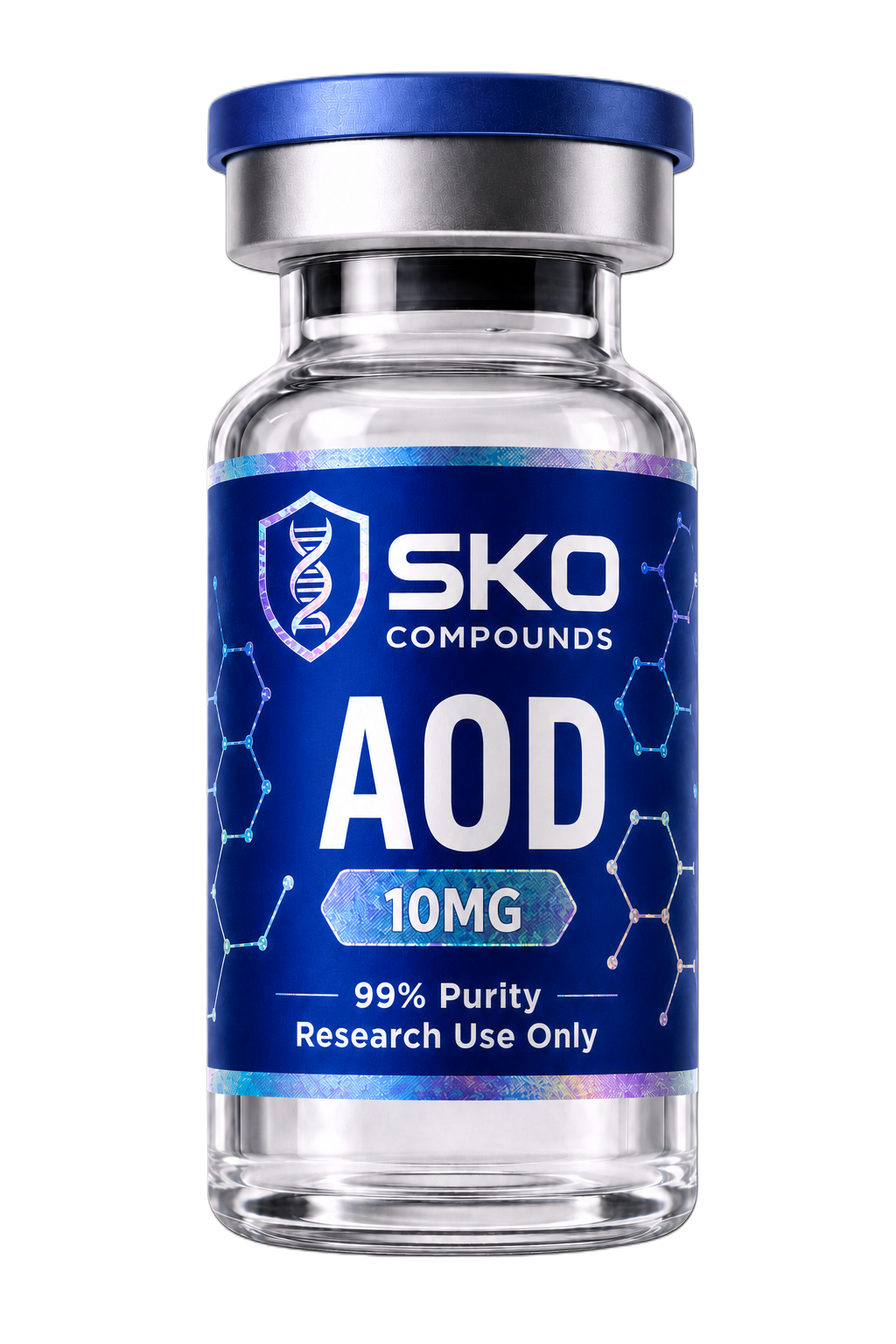
AOD-9604
AOD-9604 is a synthetic 16-amino-acid peptide fragment derived from the C-terminal region (residues 176–191) of human growth hormone. It has been studied in preclinical models as a modulator of lipolytic and lipogenic pathways, independent of the classical GH receptor signaling associated with somatogenic effects. Supplied lyophilized and independently verified at >99% purity, AOD-9604 is intended strictly for qualified in-vitro laboratory research.
Overview
AOD 9604 peptide was developed in the 1990s in an effort to develop proteins which might exhibit anti-obesity properties similar to Growth Hormone (hGH). Rigorous scientific studies and experiments have since been conducted to determine the potential action of AOD 9604 in lipolysis.(1) Lipolysis is a term to describe the process through which stored fats or triglycerides in fat cells are broken down into glycerol and free fatty acids, which may be used as an energy source by other cells. Enzymes such as lipase appear to play a critical role in this process, helping in the breakdown of these fats. It’s possible that AOD9604 may influence the fat cells and lipolytic receptors, particularly given its observed association with changes in weight and fat in murine models. Research study findings indicate that the fragment seems to have the capacity to amplify lipolytic sensitivity following its introduction. Furthermore, the study hypothesizes a potential interaction of AOD9604 with the beta-adrenergic pathway, especially concerning the beta(3)-adrenergic receptors (beta(3)-AR), which are considered to be key lipolytic receptors found in fat cells. While it is not entirely clear, the expression level of beta(3)-AR RNA, the primary lipolytic receptor in fat cells, was observed to increase in the presence of AOD 9604. This could possibly suggest that the peptide might be playing a role in enhancing the sensitivity of these lipolytic receptors, potentially making them more responsive to lipolytic stimuli. However, it is essential to note that while the peptide appears to elevate the expression of beta(3)-AR, it may not act directly through the beta(3)-AR to induce its potential lipolytic action.
Scientists and researchers have suggested that the modified portion of the hGH in the AOD 9604 peptide may be responsible for significantly inducing the fat burning process, possibly without stimulating the production of Insulin-like Growth Factor IGF 1, as opposed to the natural growth hormone.
Chemical Makeup
Molecular Formula: C78H123N23O23S2
Molecular Weight: 1815.12 g/mol
Other Known Titles: Tyr-hGH Fragment 177-191
Reviews
There are no reviews yet.