
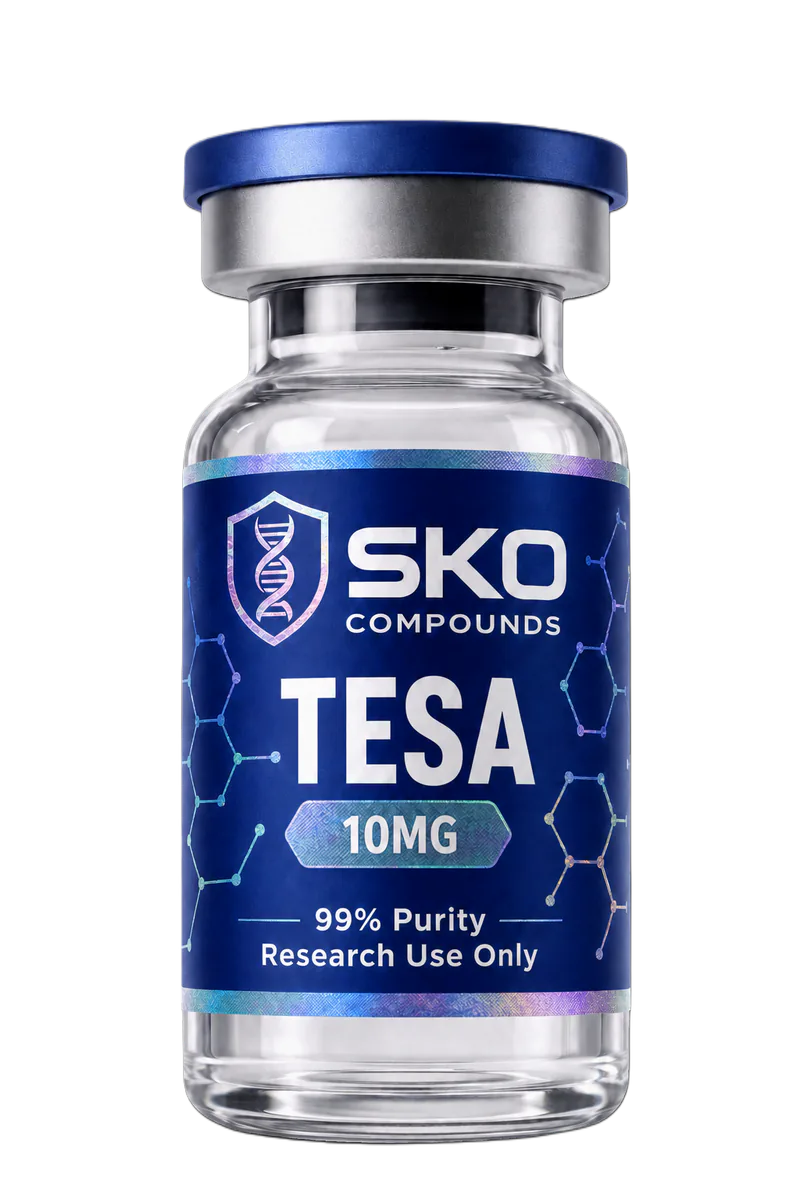
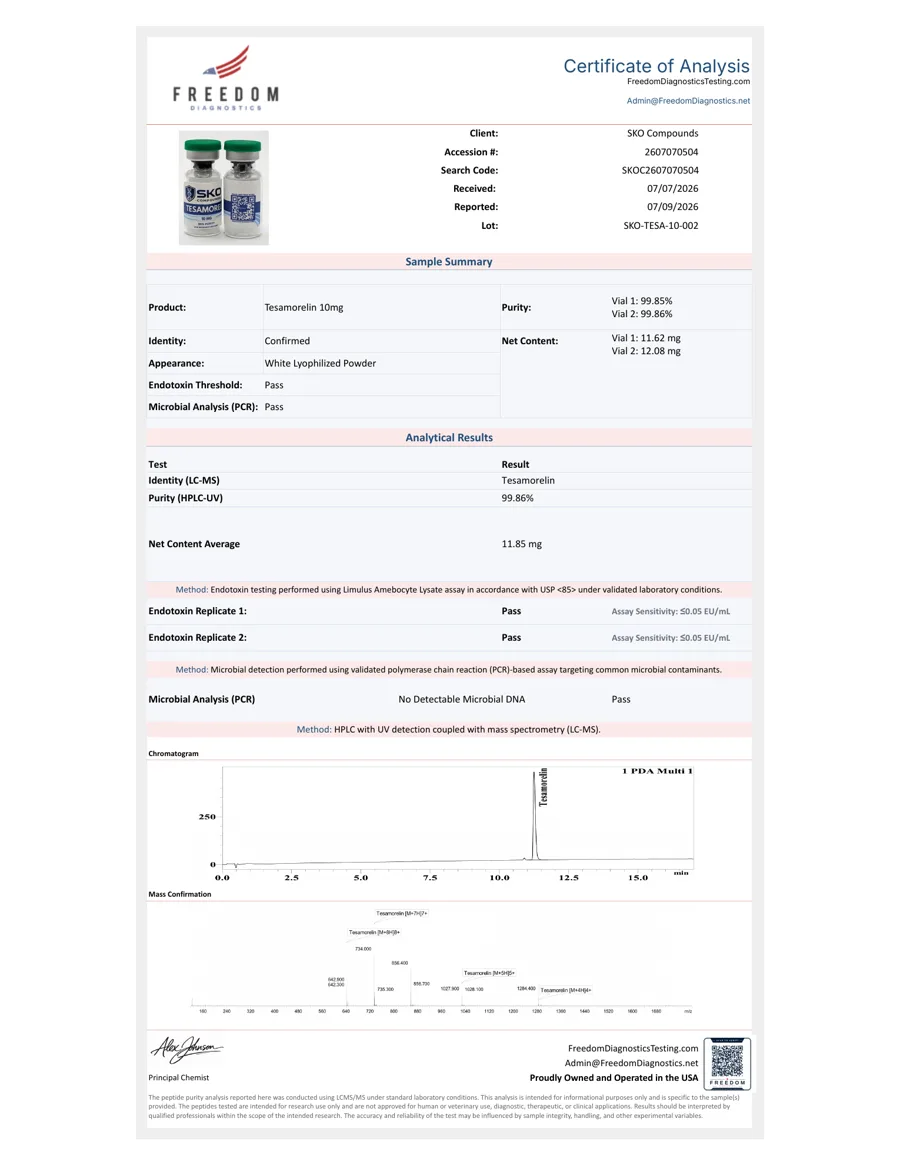
Tesamorelin
Tesamorelin is a synthetic analogue of growth hormone-releasing hormone (GHRH) with a stabilized trans-3-hexenoic acid modification. It has been extensively studied for its role in stimulating endogenous GH secretion and its effects on adipose tissue distribution and metabolic pathway regulation in research models.
When it comes to advanced body composition and metabolic optimization, Tesamorelin stands out as one of the most potent peptides available. Unlike generic fat-loss compounds, Tesamorelin is highly specialized. It holds a distinct position as a clinically backed, FDA-approved peptide designed to target deep, stubborn abdominal fat while preserving the body’s natural endocrine balance.
Whether you are exploring the therapeutic applications of this Growth Hormone-Releasing Hormone (GHRH) analog or searching for the best source to buy high-purity Tesamorelin, this comprehensive guide covers the science, benefits, and key research insights.
What is Tesamorelin?
Tesamorelin (often distributed under brand names like Egrifta SV) is a synthetic peptide consisting of 44 amino acids. It functions as a powerful GHRH analog, meaning it perfectly mimics the signals sent by your brain’s hypothalamus to stimulate the anterior pituitary gland.
Instead of introducing artificial or synthetic Human Growth Hormone (HGH) directly into your system—which can shut down your natural production and cause unwanted spikes—Tesamorelin encourages your body to secrete its own growth hormone in a natural, healthy, and pulsatile pattern. This surge in endogenous growth hormone triggers a cascade of metabolic benefits, primarily driven by the subsequent release of Insulin-like Growth Factor 1 (IGF-1).
Key Benefits of Tesamorelin Peptide
Clinical trials and modern age-management protocols highlight several targeted benefits that make Tesamorelin highly sought after:
-
Targeted Visceral Fat Reduction: Tesamorelin is widely recognized for its ability to target Visceral Adipose Tissue (VAT)—the deep, dangerous fat surrounding internal organs. Clinical studies demonstrate an approximate 15% to 18% reduction in visceral belly fat over 26 weeks.
-
Preservation of Lean Muscle Mass: While burning fat, Tesamorelin supports protein synthesis, helping athletes, aging adults, and researchers maintain or increase lean muscle mass and improve overall muscle quality (density).
-
Improved Lipid Profiles: By reducing harmful internal fat stores, the peptide has been shown to improve cholesterol and triglyceride levels, lowering overall cardiovascular risk factors.
-
Enhanced Recovery and Sleep: Increased natural growth hormone production directly correlates with better cellular repair, improved tissue recovery times, and deeper, more restorative sleep cycles.
Tesamorelin Peptide FAQ
Optimized for Google’s “People Also Ask” sections, here are clear answers to the most common questions regarding Tesamorelin therapy.
What is the typical Tesamorelin dosage and administration?
In clinical settings, the standard FDA-approved dosage for specific conditions is 2 mg injected subcutaneously once per day into the abdomen. In wellness and longevity contexts, protocols often vary, ranging from 1 mg to 2 mg administered 5 nights a week, allowing for brief “break days” to prevent receptor desensitization.
Does Tesamorelin cause systemic weight loss like Ozempic?
No, Tesamorelin operates very differently from GLP-1 agonists like semaglutide. Tesamorelin specifically targets visceral fat (the hard fat behind the abdominal wall) rather than subcutaneous fat (the soft fat beneath the skin). It alters body composition and shrinks your waistline rather than dropping massive numbers on the scale.
What are the common side effects of Tesamorelin?
Tesamorelin is generally well-tolerated. The most common side effects include mild injection site reactions (redness, itching, or swelling), temporary joint stiffness, muscle aches, or mild fluid retention. Because it increases growth hormone, blood sugar levels should be monitored routinely, especially in individuals with pre-diabetes or diabetes.
Reconstitution Note: Tesamorelin is highly sensitive to temperature and physical agitation. It is commonly reconstituted using Sterile Water or Bacteriostatic Water. Once mixed, the vial must be stored in the refrigerator between 2°C and 8°C (36°F to 46°F) and handled gently to prevent the delicate peptide structure from degrading.
Reviews
There are no reviews yet.