
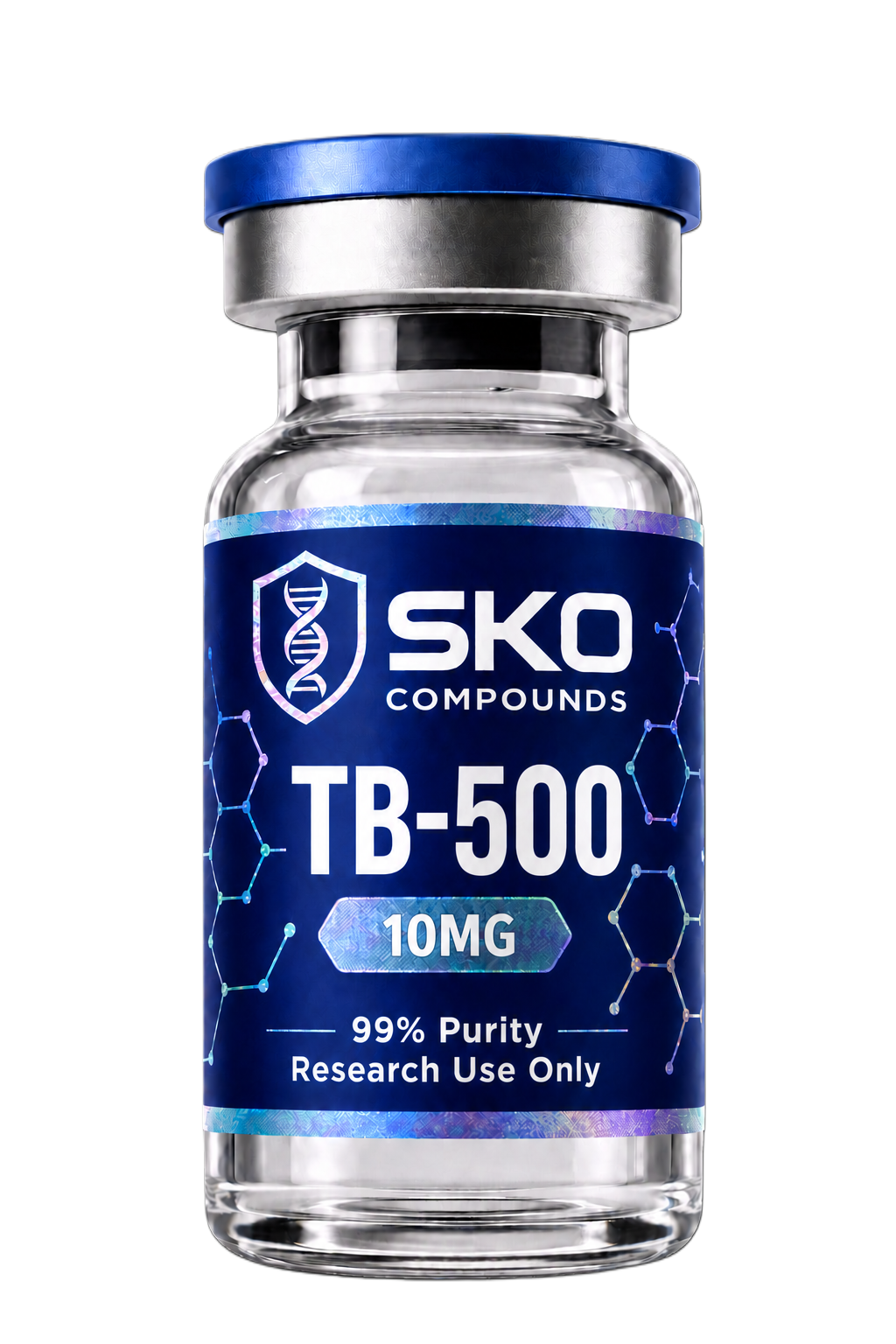
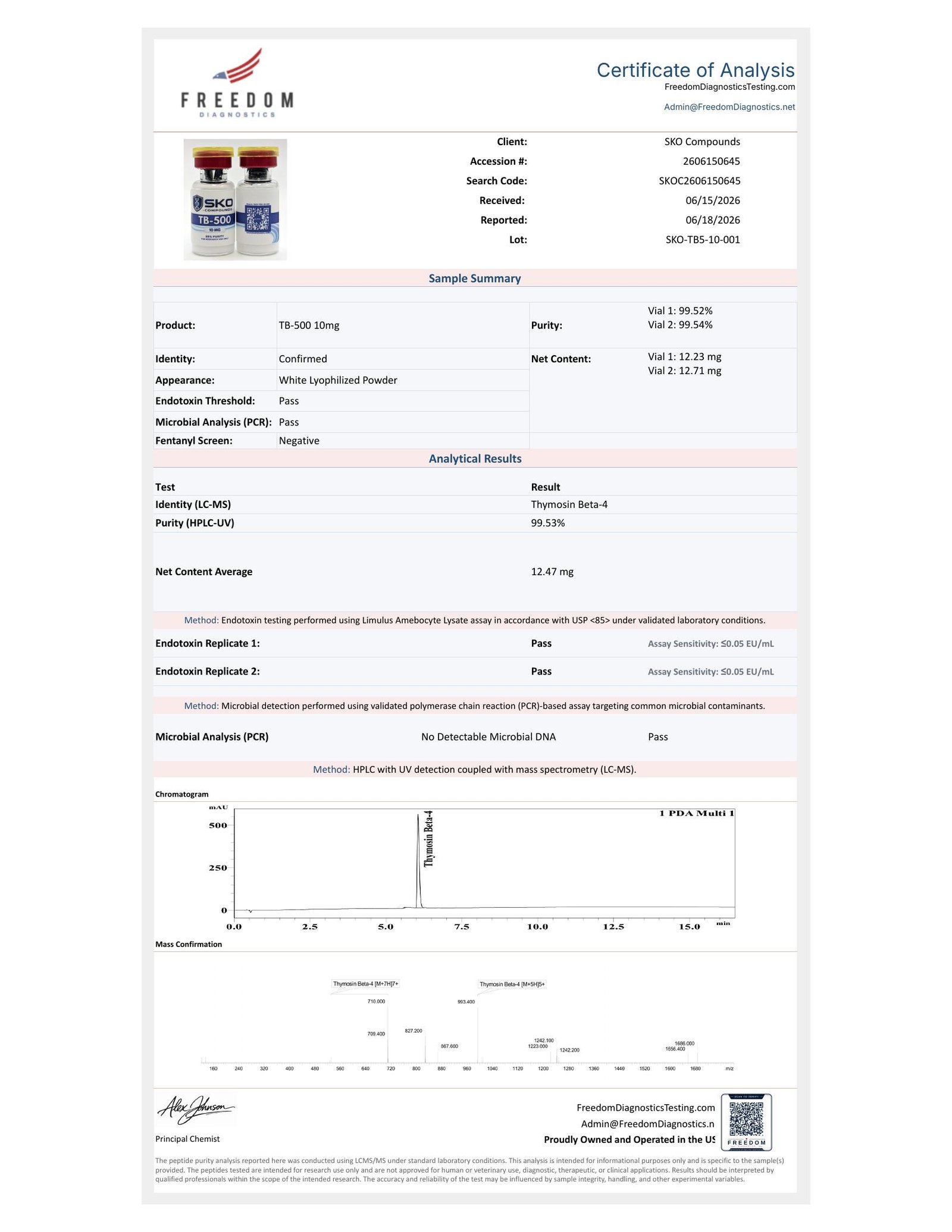
TB-500
TB-500 is a synthetic fragment of Thymosin Beta-4 studied in preclinical research for actin sequestration, angiogenesis pathways, and tissue repair signaling models.
TB-500 is a synthetic heptapeptide (consisting of 7 amino acids). It is a lab-created fragment of Thymosin Beta-4 (Tβ4), a naturally occurring 43-amino-acid protein found in high concentrations in platelets and white blood cells. It is widely used in gray-market biohacking circles alongside BPC-157, primarily for its ability to promote systemic cell movement and tissue regeneration. [1, 2, 3, 4]
How TB-500 Works (Mechanisms)
Unlike BPC-157, which predominantly works via localized growth receptors and nitric oxide pathways, TB-500 acts as a structural and systemic facilitator of healing: [1]
-
- Actin Regulation & G-Actin Sequestration: TB-500 binds to G-actin (monomer proteins). It preserves a reservoir of these building blocks so cells can quickly construct F-actin filaments. This forms the physical internal skeleton cells need to move. [1, 2, 3, 4, 5]
- Enhanced Cell Migration: By stabilizing this cellular skeleton, it allows healing cells, dermal cells, and stem cells to travel over long distances through tissue barriers directly to the source of an injury. [1, 2, 3]
- Systemic Angiogenesis: It promotes the growth of new blood vessels across the entire body, restoring circulation to damaged soft tissues. [1, 2]
- Downregulating the NF-κB Pathway: It dampens the NF-kappa beta pathway, which curtails the excessive production of pro-inflammatory cytokines (like IL-1 and TNF-alpha) that cause chronic swelling. [1, 2]
Primary Areas of Application
Due to its molecular structure, TB-500 has a low molecular weight, allowing it to travel easily through the body. It is researched for: [1]
-
- Muscle Tear and Atrophy Recovery: Promoting the activation of satellite stem cells to rebuild fibers after severe muscle strains or pulls.
- Broader Range of Motion: Users note improved joint flexibility and reduced fibrosis (scar tissue buildup) during injury rehabilitation.
- Wound and Skin Repair: Accelerating the healing of superficial wounds and deep skin remodeling. [1, 2, 3, 4, 5]
2026 Regulatory Status and Policy Updates
The official stance on TB-500 is undergoing rapid shifts, placing it in a fluid legal gray area: [1]
-
- The FDA Dynamic: TB-500 is not FDA-approved for human consumption. However, after a procedural reset in April 2026 that removed it from the restrictive Category 2 list, the FDA Pharmacy Compounding Advisory Committee (PCAC) scheduled a dedicated hearing for July 23–24, 2026. They are reviewing whether to add TB-500 to the bulk substances list, which would allow compounding pharmacies to legally fill doctor-written prescriptions. Notably, FDA internal scientists remain skeptical, citing a distinct lack of robust human safety trials. [1, 2, 3, 4, 5, 6]
- Anti-Doping and Military Enforcement: TB-500 remains strictly banned under Section S2 (Peptide Hormones and Growth Factors) on the World Anti-Doping Agency (WADA) Prohibited List. It is subject to strict liability, meaning an athlete will face testing sanctions regardless of whether it was prescribed by a physician. It is similarly banned across active-duty military frameworks. [1, 2, 3, 5]
- Human Data Constraints: Similar to other research chemicals, the overwhelming majority of efficacy data stems from animal models (rodent and equine injury studies). True large-scale human safety data does not exist, leaving long-term side effects largely unvetted. [1, 2]
Let me know if you would like me to unpack:
Reviews
There are no reviews yet.